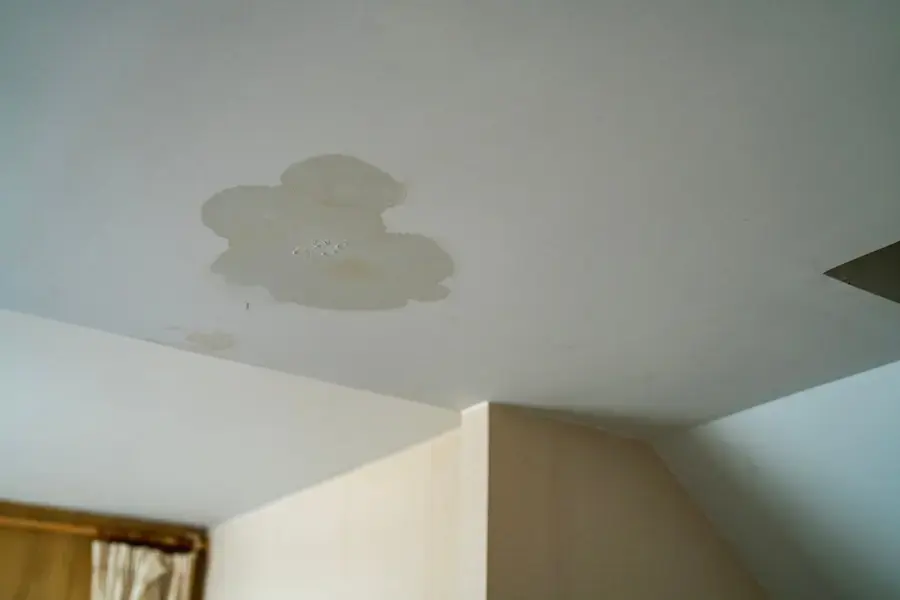
In a town where about half of homes are rented, a stain on the ceiling often means a problem in the unit above, not the roof. Tracing that water before drying starts is what keeps the same leak from coming back.
Key takeaways
- About half of Elkton homes are rented, so a ceiling leak often starts in a unit above and has to be traced to its source.
- A bulging or sagging ceiling holds trapped water and can fall, so people and belongings should stay out from under it.
- Photographs and written notice to the owner or manager come before any repair.
- Shared walls and floors mean drying often has to reach adjoining spaces.
- Moisture readings, not looks, show when a ceiling is dry.
Why many Elkton ceiling leaks start next door
The owner occupied housing rate in Elkton is 50.6 percent, which means about half of homes are rented. Rental buildings and apartment complexes stack units on top of each other, and water moves down through floors and ceilings.
Elkton mixes older neighborhoods such as Elkton Heights with newer subdivisions such as Heritage Woods. The mix of building ages means supply pipes, drains and roofs come in many forms, and the same ceiling stain can have several different causes.
Elkton had 4,743 housing units in 2000 and 5,944 in 2010, so the town's housing stock grew quickly in that decade. Newer buildings still leak, and shared walls still carry the water.
ChristianaCare Union Hospital, the retail centers and the apartment complexes in town show how many kinds of buildings share space with neighbors. A leak in any of them can travel through a ceiling before anyone sees it.
- A leak from a bathroom or kitchen in the unit above.
- A burst or loose supply pipe in a wall or floor.
- An overflowing tub, sink or washing machine.
- A roof or flashing leak that reaches the top floor.
- A drain or condensate pipe that has failed above the ceiling.
What a tenant should do first
The first priority is safety. Water in a ceiling can sit above light fixtures and wiring, and a bulge can hold a surprising amount of weight.
After that, the focus is on stopping further damage and building a record.
Keep people and belongings safe
Stay out from under a sagging or bulging ceiling, and do not poke it open without help. Switch off power to a room only from a dry location, and keep light fixtures off if water is dripping from them.
Move furniture, electronics and bedding out of the wet area.
- Do not stand under a bulging ceiling.
- Turn off lights and fixtures that are wet or dripping.
- Place buckets under drips and clear the area below.
Notify and document
Photograph the stain, the drip and any damaged items, and note the date and time. Then notify the owner or property manager in writing so there is a clear record.
If the source is known to be a supply pipe, the water can be shut off at the unit's valve or the building's main by the owner or manager.
Tracing the source before drying
Drying a ceiling without finding the source only buys time. A crew uses moisture meters and thermal imaging to follow the water back through the ceiling, the wall cavities and the joist bays.
The path is often indirect. Water can run along a joist before it drops through a ceiling, so the stain may sit well away from the actual leak.
The ceiling leak water damage page describes how crews trace and open ceilings safely, and how drywall and plaster are dried or removed.
- Readings on the ceiling, the walls below and the floor above.
- Checks on the bath, kitchen and laundry areas of the unit above.
- Inspection of supply and drain pipes where they pass through floor framing.
- A look at the roof, attic or top floor where a roof leak is possible.
Shared walls, shared floors, shared drying
With about half of Elkton homes rented, many buildings share walls and floors. Drying often has to reach adjoining spaces, because moisture does not stop at a unit boundary.
That can mean readings in the neighbor's wall, equipment in a hallway or access to the unit above. Coordination between tenants, owners and the crew keeps the work moving.
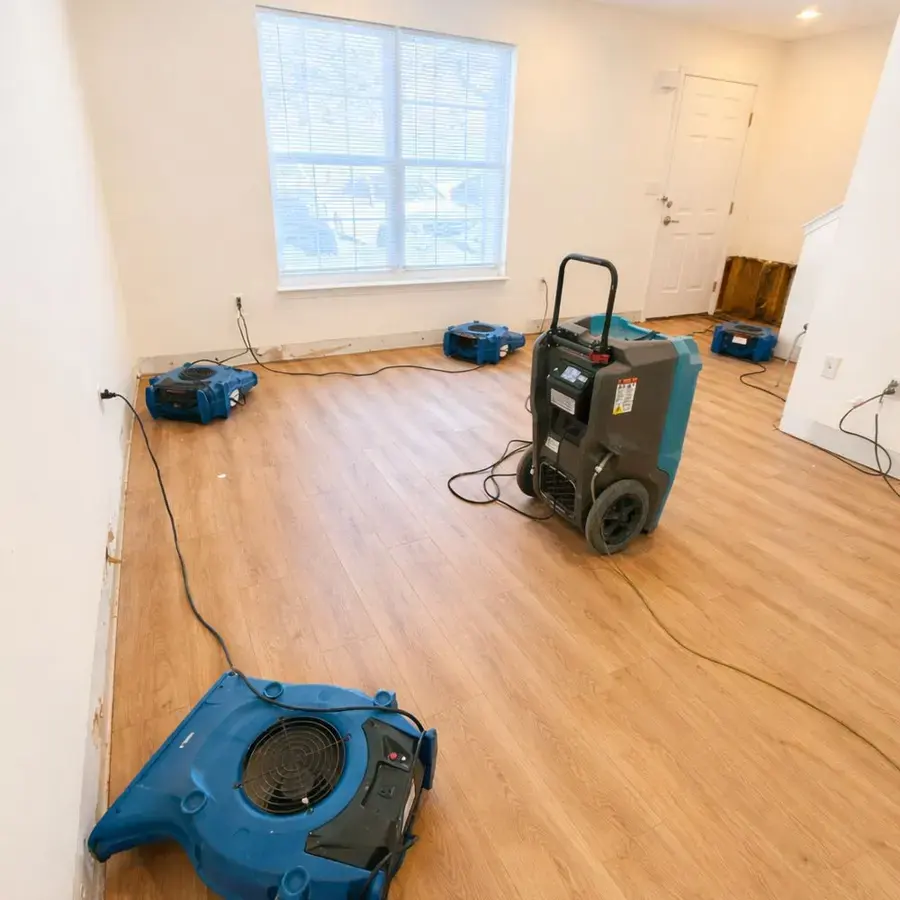
Noise and disruption are part of it. Air movers and dehumidifiers run day and night in the affected rooms, and a short notice to neighbors helps everyone plan.
The structural drying service describes how dehumidifiers and air movers are placed to reach wet cavities, and the drying follows the IICRC S500 standard.
Who handles what in a rental
The owner or manager is generally responsible for the building and its repairs, and the tenant is responsible for reporting the problem and protecting belongings. A renter's own insurance usually covers personal property, while the building's policy covers the structure.
Details differ by lease and policy, so reading both is worthwhile. Photographs, notes and receipts help every party.
If the leak damaged a tenant's belongings, a list with photographs and approximate values makes a claim under a renter's policy easier to prepare.
Elkton has a Code Enforcement Officer and a Board of Housing Appeals, and Cecil County has a Permits and Inspections Division. Those bodies exist for housing and building questions, and a tenant who is unsure where a problem belongs can ask them where to start.
What drying and repair look like
A wet ceiling is dried in place if it is firm, and opened or removed if it is sagging, stained through or has been wet for a long time. Insulation above it is checked and often replaced.
Wet materials left in place can start to grow mold in a 24 to 48 hour window, so drying should start quickly. The crew sets equipment, takes readings at each visit and removes equipment only when the readings match a dry reference.
After the ceiling dries, repairs follow. Drywall or plaster is patched, insulation is replaced where needed, and paint is the last step once the readings are steady.
The Elkton water damage page lists the other services available in town.
Questions
Why is there a ceiling leak when it has not rained?
In a multi unit building the source is often a bath, kitchen or supply pipe in the unit above, not the roof. A crew traces the water to find it.
Should a tenant pop a bulging ceiling?
No. A bulging ceiling can hold a lot of water and can fall, and wires may run above it. A crew opens it safely.
Who pays for repairs to a rental ceiling?
The owner or manager is generally responsible for the structure, and a renter's policy usually covers personal property. Leases and policies differ, so both are worth reading.
Do neighboring units need drying too?
Often yes. Shared walls and floors carry moisture, so readings are taken in adjoining spaces and equipment may be placed there.
How can a tenant tell when the ceiling is dry?
By moisture readings, not by touch or sight. A ceiling can feel dry while the insulation and framing above are still wet.