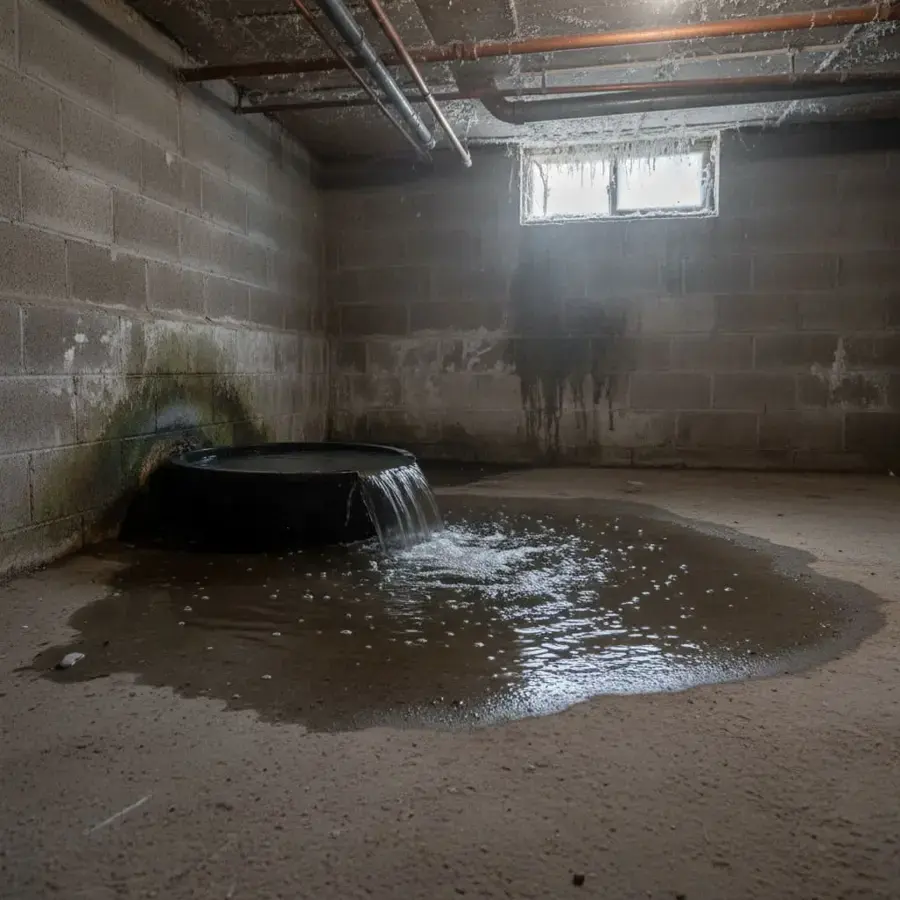
A sump pit that overflows during a storm turns a quiet basement into a flooded room in a short time, and New Castle's low ground makes the stakes higher than they look. The first day decides whether the damage stays on the floor or climbs into walls and stored belongings.
Key takeaways
- A pump usually stops for one of a few reasons: the power went out, the float stuck, the intake clogged or the discharge pipe is blocked.
- Electricity and standing water do not mix, so the panel comes first and the water comes second.
- Water that rose through the pit from the ground is not clean, so wet carpet and pad are treated as contaminated.
- Extraction removes standing water before any drying equipment is set, and the slab is dried to a reading, not a guess.
- A working pump is only half the fix; the float, the check valve and the power source need a look before the next storm.
Why sump pits overflow in New Castle
New Castle sits on low coastal plain ground, and the water table runs high near the marsh edges behind the old dikes. A pit in that setting fills fast whenever heavy rain arrives, and it has little room to spare.
The housing makes it more common. Postwar ranches, capes and split levels in Castle Hills, Collins Park, Wilmington Manor and Swanwyck Estates often rely on a pit and pump to keep the lowest level dry.
Nor'easters and tropical storm remnants bring the long, soaking rain that tests those pumps. The remnants of Hurricane Ida on September 1, 2021 dropped heavy rain across northern New Castle County and showed how quickly low ground can fill.
A storm also tends to cut the power at the worst moment, which is the most common reason a pump quits just when it is needed.
- Power outage: the pump has no electricity and no battery backup to carry it through.
- Stuck float: the switch that tells the pump to start is jammed against the pit wall or tangled.
- Clogged intake: silt and debris block the pump so it hums without moving water.
- Blocked discharge: a pipe that is kinked, disconnected or blocked outside sends water back into the pit.
- Worn pump: an older unit simply fails under a long run of heavy rain.
The first moves before anyone touches the water
The first job is safety. A flooded basement can hide live outlets, extension cords, a furnace and a water heater, and a person standing in water near any of them is at risk.
If the panel is dry and reachable without stepping into water, power to the basement circuits can be shut off there. If the panel itself is wet or the floor is flooded, the electric utility or an electrician should handle it before anyone goes in.
Shut off and stay out
Turn off power to the basement only if it can be done from a dry spot. Keep children and pets upstairs, away from the stairs and the water.
Do not run a standard wet vacuum on a flooded floor, and do not use fans plugged into basement outlets.
- Stay out of water that is near outlets, cords or appliances.
- Move to dry ground and call for help if the water is rising.
- Shut off the water supply if a pipe or tank is also leaking.
Photograph before moving things
Take photos and short video of the water level, the pit, the pump and the damaged items before anything is moved. These records support an insurance claim later.
Lift what can be lifted safely, such as boxes, rugs and small furniture, onto dry surfaces upstairs.
What extraction removes first
Extraction comes before drying because equipment cannot dry a room that is still holding standing water. Truck mounted and portable pumps pull the water out, and a crew works from the deepest point toward the edges.
Water that came up through the pit from the ground is treated as contaminated, not clean. It carries soil, bacteria and whatever sat on the floor, so the cleanup plan reflects that.
Soaked carpet, pad and stored cardboard are the usual first removals. Porous materials that hold contaminated water are rarely worth saving, and pulling them early lets the slab begin to dry.
The water extraction page covers how that first stage works.
- Standing water is pumped out, then the film left on the floor is extracted.
- Wet carpet and pad are lifted and removed when the water was contaminated.
- Bottom strips of wet drywall are cut back where moisture readings show the wicking.
- Salvageable furniture and boxes are moved to a dry space and sorted.
Drying the slab, walls and framing
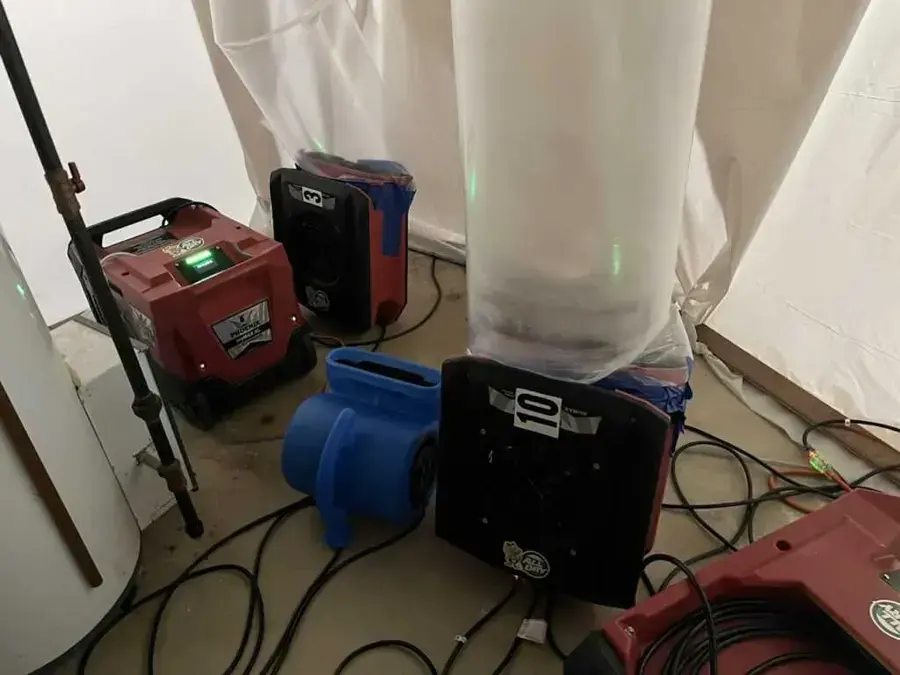
After extraction, a crew sets air movers and dehumidifiers and takes moisture readings on the slab, the wall bases and any framing. Drying follows the readings, not a calendar, and the standard used in the trade is IICRC S500.
A concrete slab dries slowly, and finished basements hide more water than they show. Wall cavities, baseboards and the bottom of insulation are common places for moisture to sit after the surface looks dry.
The target is to bring wet materials back to a dry reference within the first 24 to 48 hours of effective drying so that mold has no chance to settle in. Equipment stays until the readings match.
- Dehumidifiers pull moisture out of the air so the slab and walls can release theirs.
- Air movers push dry air across wet surfaces and into low wall bays.
- Moisture readings are logged each visit so the dry point is documented.
- Equipment is removed only after the readings come back to the dry reference.
Fixing the pump so the next storm does not repeat this
Once the water is gone, the pump itself needs attention. A restoration crew handles water and drying, and a plumber or pump installer handles the equipment, so the two jobs work side by side.
A homeowner can run a simple test after the area is safe and dry: pour water into the pit and watch whether the float rises, the pump starts and the water leaves through the discharge pipe. If any step fails, the pump needs repair or replacement.
- Check that the float moves with ease and is not wedged against the pit wall.
- Clear the intake and any debris from the bottom of the pit.
- Look at the discharge pipe outside for kinks, blockage or a loose connection.
- Confirm the check valve is in place so water does not run back into the pit.
- Ask about a battery backup pump, which keeps working when the power fails.
When it is more than a pump problem
Sometimes the pit is not the real story. If groundwater near the marsh edge or heavy rain overwhelms the whole foundation, water can arrive through the floor, the walls and the drains at once.
In those cases the job reads more like a flooded basement than a single failed device. The basement flooding cleanup page explains how finished and unfinished basements are handled, and the sump pump failure cleanup page covers the pit overflow itself.
Coverage for pit overflow and groundwater varies a great deal by policy, and some policies need a separate endorsement. It is worth reading the policy language or asking the insurer before the first call is made.
Questions
Why did my sump pump stop working during the storm?
The most common causes are a power outage, a float that stuck, a clogged intake or a blocked discharge pipe. A worn pump can also fail under long heavy rain.
Is it safe to go into a basement with water on the floor?
Not until the power is dealt with. Water near outlets, cords or appliances is a shock risk, so power should be shut off from a dry spot or by the utility or an electrician.
Is sump pit water considered clean or contaminated?
Water that rose from the ground through the pit is treated as contaminated, so carpet, pad and porous items that soaked it are usually removed rather than dried.
How long does a flooded basement take to dry?
It depends on how much water came in and what it soaked. Drying follows moisture readings, and equipment stays until the slab and walls read dry.
Does a backup pump make sense for New Castle homes?
Storm power cuts are a common reason pumps fail, so a battery backup is worth asking a plumber about, especially where the water table runs high near the marsh edges.