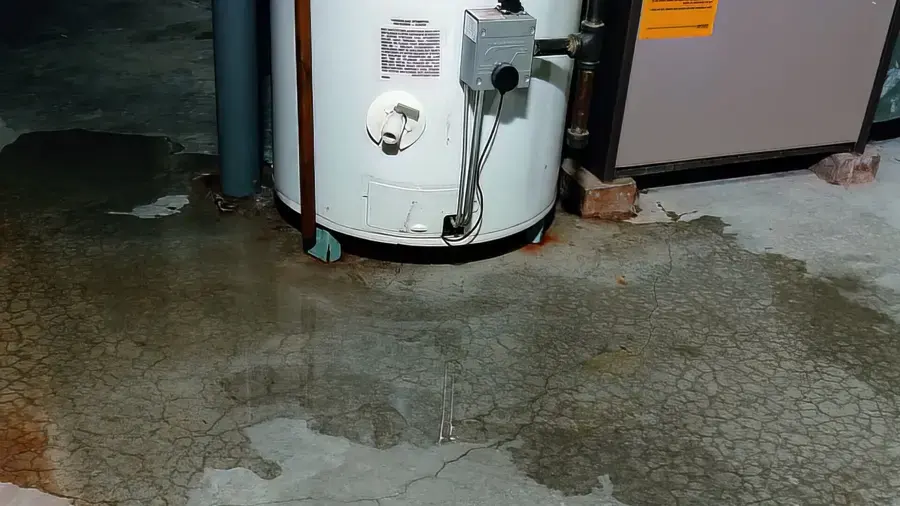
A water heater tank that fails can release a large volume of water across a floor in a short time. In Newark, replacing that tank also involves a city permit, so the cleanup and the repair have to be planned together.
Key takeaways
- A leaking tank is replaced, not patched, and the water on the floor needs to be removed whether or not the new unit is ready.
- Newark requires a building permit to install or replace a water heater, and for structural reconstruction due to water damage.
- Shutting off the cold water supply to the tank stops new water, and the power or gas to the unit should be turned off safely.
- Wet drywall, insulation and flooring around a tank are dried or removed based on moisture readings.
- In a rental, quick written notice to the owner and clear photographs make the next steps much smoother.
What happens when a water heater tank fails
A tank water heater holds a large amount of water, and when a seam, a fitting or the tank wall gives way, that water spreads across the floor and into everything nearby. Basements, utility closets and garages are the usual places.
Failures often come with little warning. A tank that has been weeping for a while can suddenly start streaming, and by the time it is noticed the surrounding drywall and floor are already wet.
In a unit with a finished floor, the water can also run under cabinets, flooring and baseboards, where it is out of sight. That hidden water is what makes a quick leak into a slow repair.
- Rust stains or moisture at the base of the tank.
- A relief valve that drips or weeps.
- Rumbling or popping while the tank heats.
- A damp smell or a puddle in a closet or on the slab.
The first steps after a leak is found
The first job is to stop new water and keep people safe. The cold water supply to the tank is closed, and the power or gas to the unit is turned off from a dry spot.
Water near an electric panel or outlets is a shock risk, and a gas heater adds its own hazards. If the area is flooded, it is safer to wait for help than to wade in.
Stop the water and the energy source
Close the cold water valve above the tank. For an electric unit, switch off its breaker only if the panel is dry and reachable; for a gas unit, turn the gas control to off if it can be done safely.
If gas is smelled or a hissing sound is heard, leave the home and call the gas utility.
- Close the cold water supply valve to the tank.
- Turn off the electric breaker or the gas control from a dry spot.
- Keep children and pets out of the room.
Document before moving things
Photograph the tank, the water on the floor and any damaged items. Short video helps show how far the water spread.
Lift boxes and belongings off the wet floor and move them to a dry area.
How the cleanup runs
Extraction comes first. A crew pulls the standing water off the floor with pumps and vacuums, then checks the walls, baseboards and any stored items that wicked water upward.
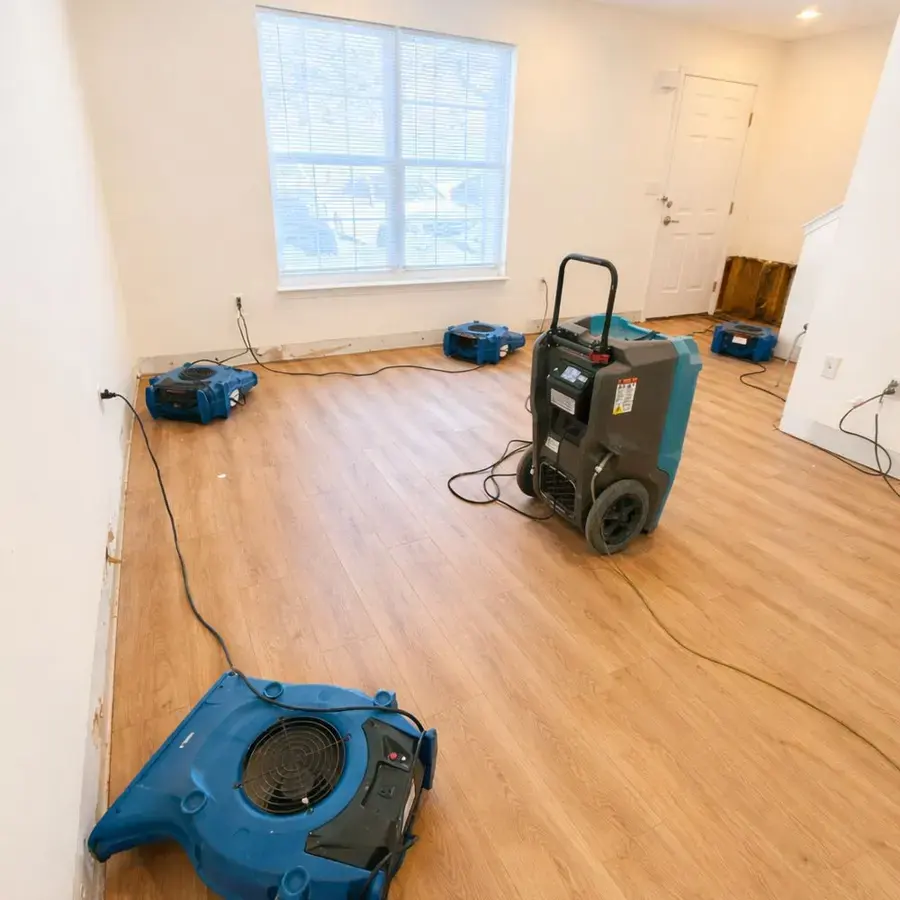
Moisture readings show how far the water traveled. Drywall that stays wet is often cut back, soaked insulation near the tank is removed, and flooring such as carpet or laminate is lifted so the subfloor can dry.
The water heater leak cleanup page describes how this works for tank failures in basements and utility closets, and the drying follows the IICRC S500 standard.
- Standing water is pumped out and the floor is extracted.
- Wet drywall and insulation are cut back where readings show moisture.
- Floor coverings are lifted so the slab or subfloor can dry.
- Dehumidifiers and air movers run until the readings match a dry reference.
Newark's permit rules and why they matter
The city of Newark requires a building permit to install or replace water heaters, furnaces and boilers. It also requires a permit for structural reconstruction due to water damage.
That means a tank replacement is not only a plumbing swap. It is a permitted job, and any rebuild of walls or framing after the water also needs a permit.
Careful drying comes before reconstruction. Moisture readings and a written drying log show that materials are dry before they are closed up, which protects the rebuild and the household.
The City of Newark provides water and wastewater service inside city limits, so a broken water heater is a private plumbing matter, not a city main issue. The permit is about the work on the property.
- Confirm with the installer that the permit is in place before the old tank comes out.
- Keep photographs and drying records for the permit file and for insurance.
- Plan the drying and the replacement together so the room is not left without hot water longer than needed.
- Do not close walls over materials that have not been checked with a moisture meter.
Rentals, student housing and who does what
About 54.3 percent of Newark housing units were owner occupied in the 2008 to 2012 American Community Survey, below New Castle County at about 70 percent. That means many water heater leaks happen in rental units where owner and tenant have to work together.
Residents have raised concern about single family homes converted to student rentals and about student targeted apartments downtown. In buildings like these, a tank in a shared utility space can affect more than one unit.
A tenant should report the leak to the owner or manager right away and put the notice in writing, with photographs. The owner arranges the repair, and the restoration crew handles the water and drying.
Prevention and when to plan a replacement
A tank does not last forever, and planning a replacement is easier than an emergency. A drain pan with a drain pipe, a working relief valve and an occasional check of the base for rust or moisture all help.
Where a tank sits matters. A tank in a closet sends water into wall framing, a tank in a basement spreads across the slab, and a tank above a finished room can wet a ceiling below.
A property owner can also check where the main shutoff is, so a leak is stopped quickly.
Water damage from a tank failure is often covered differently from the cost of the new tank, so it is worth reading the policy wording or asking the insurer. The Newark water damage page lists the other services the crew provides, including structural drying after a larger loss.
Questions
Does Newark require a permit to replace a water heater?
Yes. The city requires a building permit to install or replace water heaters, furnaces and boilers, and for structural reconstruction due to water damage.
Can a leaking water heater tank be repaired?
Usually not. A leak from the tank itself means the tank has failed, so it is replaced, while a leaking fitting or valve may be repaired by a plumber.
What should be shut off first when a tank leaks?
The cold water supply valve above the tank, then the power or gas to the unit, done from a dry spot. If the area is flooded, wait for help.
Who handles the leak in a Newark rental?
The tenant reports it to the owner or manager in writing with photographs. The owner arranges the repair and the restoration crew handles extraction and drying.
Why does drying come before rebuilding?
Closing walls over wet materials traps moisture, and the city requires a permit for reconstruction due to water damage. Readings and a drying log show the materials are dry.