Structural Drying and Dehumidification in Wilmington, DE
After the standing water is gone, framing and masonry in Wilmington still hold moisture. The drying crew sets equipment and logs readings until the building reaches a dry reference.
(888) 442-3602Get the drying started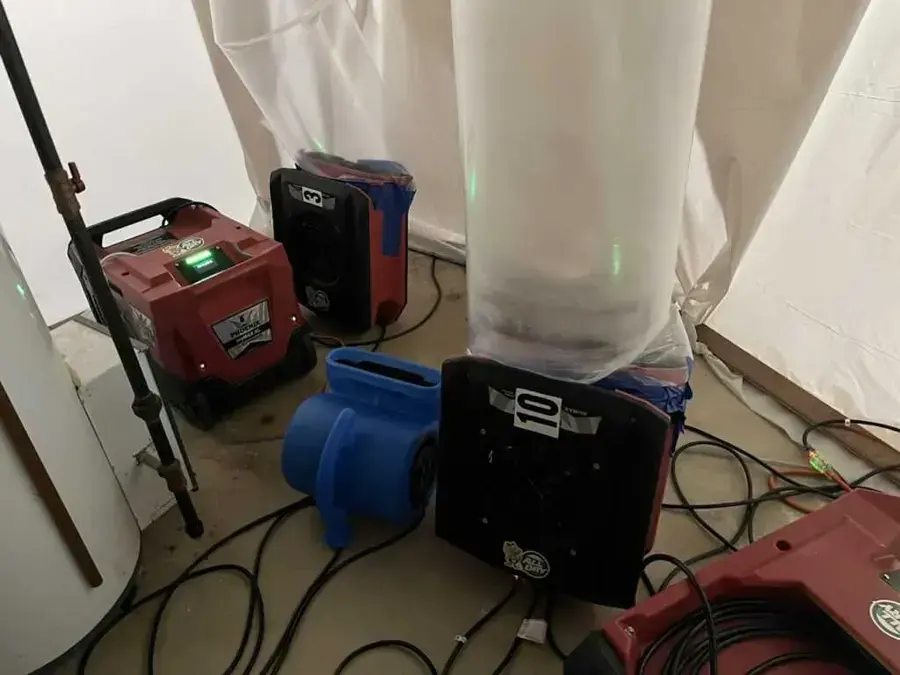
Structural Drying and Dehumidification at a glance
First steps for structural drying and dehumidification in Wilmington
Keep the heat steady
A steady room temperature helps equipment pull water from materials.
Leave the equipment on
Do not switch machines off to save power, since readings can rebound.
Keep doors closed
Closed doors keep the drying zone from losing air.
Do not rebuild early
Walls and floors stay open until readings reach dry.
Structural drying is the part of a water loss that nobody sees. After the standing water is gone, framing, subfloor, plaster and masonry still hold moisture that a dry surface hides.
Drying a building, not a room
Wilmington has brick row houses that share walls, so moisture can cross from one house to the next. Drying has to consider the whole building, not only the room where the water appeared. The humid subtropical climate also slows evaporation in summer.
What does structural drying and dehumidification cost in Wilmington, DE?
In Wilmington, DE, structural drying typically runs $1,000 to $8,000. One or two rooms sit low; large or dense materials such as masonry sit high.
One or two rooms
$1,000 to $2,500- Air movers
- One dehumidifier
- Daily readings
Basement or floor
$2,500 to $5,500- Multiple dehumidifiers
- Wall cavities dried
- Several room checks
Large or dense materials
$4,500 to $8,000- Desiccant units
- Masonry dried
- Extended run
Ranges are typical, not a quote: category of water, square footage, material class and how fast drying started move the number most. Run the water damage cost calculator for a closer range.
The structural drying and dehumidification process in Wilmington, step by step
- 1
Map the moisture
Meters and a thermal camera show wet materials.
- 2
Set the equipment
LGR, desiccant and air movers are sized to each room.
- 3
Read daily
A psychrometric log tracks temperature and humidity.
- 4
Confirm dry
Equipment leaves when readings match a dry reference.
Equipment and readings
LGR dehumidifiers pull water from the air, desiccant units handle brick and plaster, and air movers keep it circulating over wet surfaces. A psychrometric log records temperature and humidity every day.
- Pinless meters map wet materials on day one
- Equipment is adjusted as readings fall
- Wet material that will not dry is removed
- Equipment leaves only when readings reach the dry reference
When the job is done
Dry means within 2 to 4 points of a dry reference, not dry to the touch. Before this stage, water extraction removes the bulk of the water, and historic home water damage covers slow methods for old materials.
Structural drying and dehumidification across Wilmington and nearby towns
The Wilmington drying crew covers ZIP 19801, 19802, 19805 and 19806, from row houses in Trinity Vicinity and Quaker Hill to larger buildings near the Riverfront and Southbridge.
The same service nearby: structural drying and dehumidification in New Castle, Elsmere, Kennett Square.
Related water damage services in Wilmington
Structural Drying and Dehumidification questions in Wilmington, DE
Still dealing with structural drying and dehumidification?
Water left in a Wilmington building keeps wetting framing and masonry until it is dried. The drying crew starts at any hour.
How long does structural drying take?
Most take three to seven days, depending on the materials involved. Masonry, thick wood and wet plaster take longer.
Why do the machines stay on?
Surface dryness is not material dryness. The equipment runs until readings match a dry reference.
What is a desiccant dehumidifier?
It pulls water from the air with a drying wheel, and it works well on brick, plaster and cool spaces.
Why log readings every day?
The log proves progress, adjusts equipment and gives the insurer a record.
Does drying prevent mold?
Wet organic material can start to grow mold in 24 to 48 hours, so fast drying lowers the risk.
Can walls be dried without removal?
Often yes, when the walls are still firm. Cavity systems push warm air into closed walls so plaster or drywall can stay.
Building still wet in Wilmington? Call now.
The crew maps moisture, sets equipment and logs the readings.
New Castle Water Damage Restoration · New Castle, DE